Many SaaS companies devote enormous effort to product development, sales expansion, and feature innovation. Yet they undervalue a far more powerful lever: Pricing.
Pricing remains the most under-appreciated path to both margin expansion and sustainable growth. Because of that neglect, many companies leave significant revenue and profit on the table without even realizing it.
Table of Contents
The Hidden Costs of Pricing Inertia
When a SaaS vendor treats pricing as an afterthought, several adverse consequences follows:
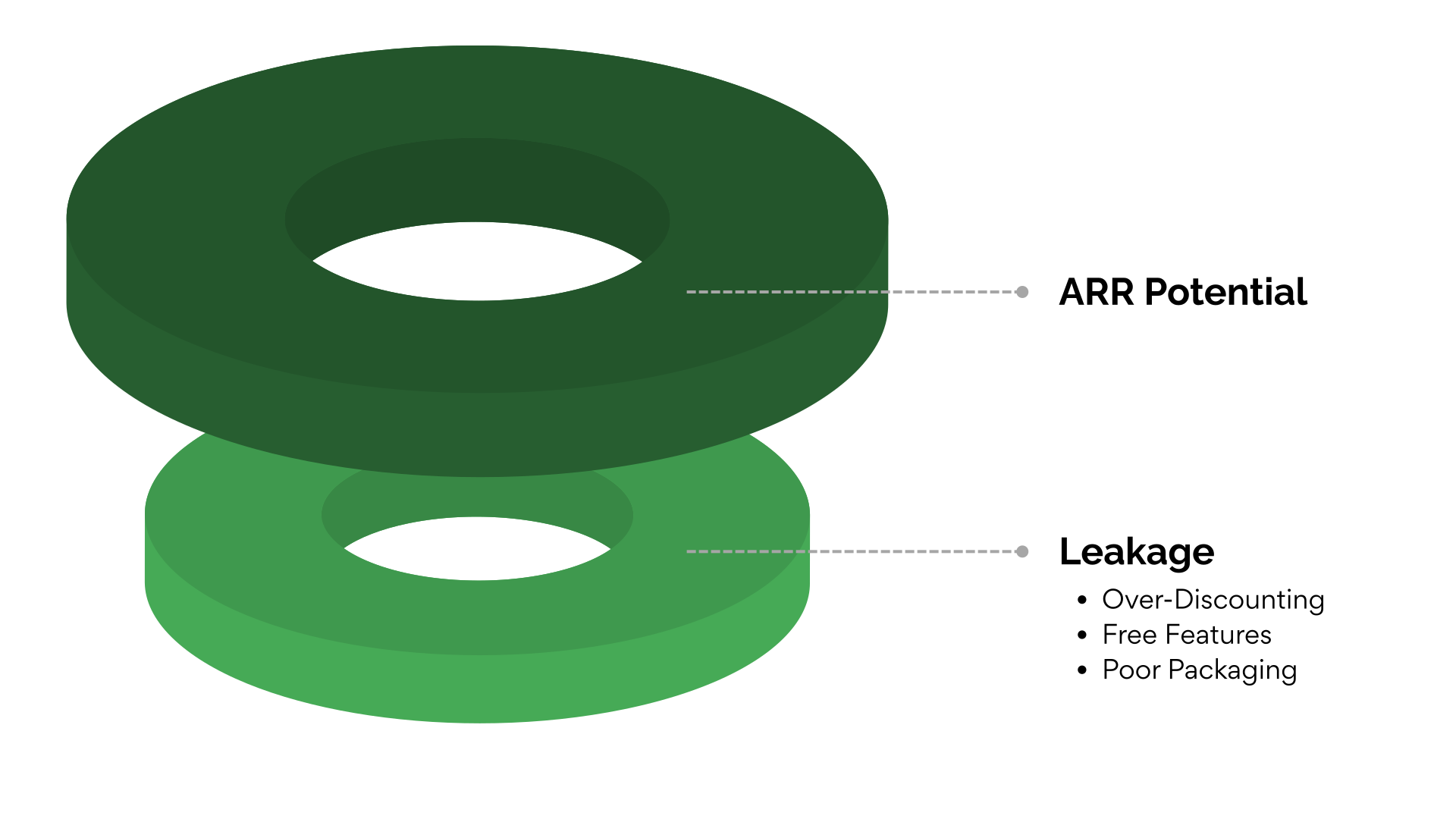
- Revenue leakage through discounting and inconsistent deal structures. Excessive discounts or unmanaged custom deals often erode 5 to 15 percent of potential Annual Recurring Revenue (ARR). This leakage is frequently invisible until leadership runs the numbers.
- Failure to monetize innovation. New feature sets, particularly high-value ones such as AI modules, often launch under existing price plans. That approach essentially gives away new value for free. In today’s environment, where many vendors embed or plan to embed AI capabilities, this is a costly mistake.
- Misalignment between value delivered and pricing structure. Legacy models based on seat-counts or flat tiers may subsidize heavy users while undercharging high-value or usage-intensive segments. That erodes unit economics and undermines the business model over time.
- Longer sales cycles and weaker value communication. When pricing appears arbitrary or misaligned with outcomes, buyers struggle to understand the value proposition. That often translates into delayed deals, discount requests, or lost opportunities.
In aggregate, these issues degrade profitability, reduce long-term customer value, and squander the potential returns from product innovation.
Red Flags That Indicate Your Pricing Might Be Undervalued
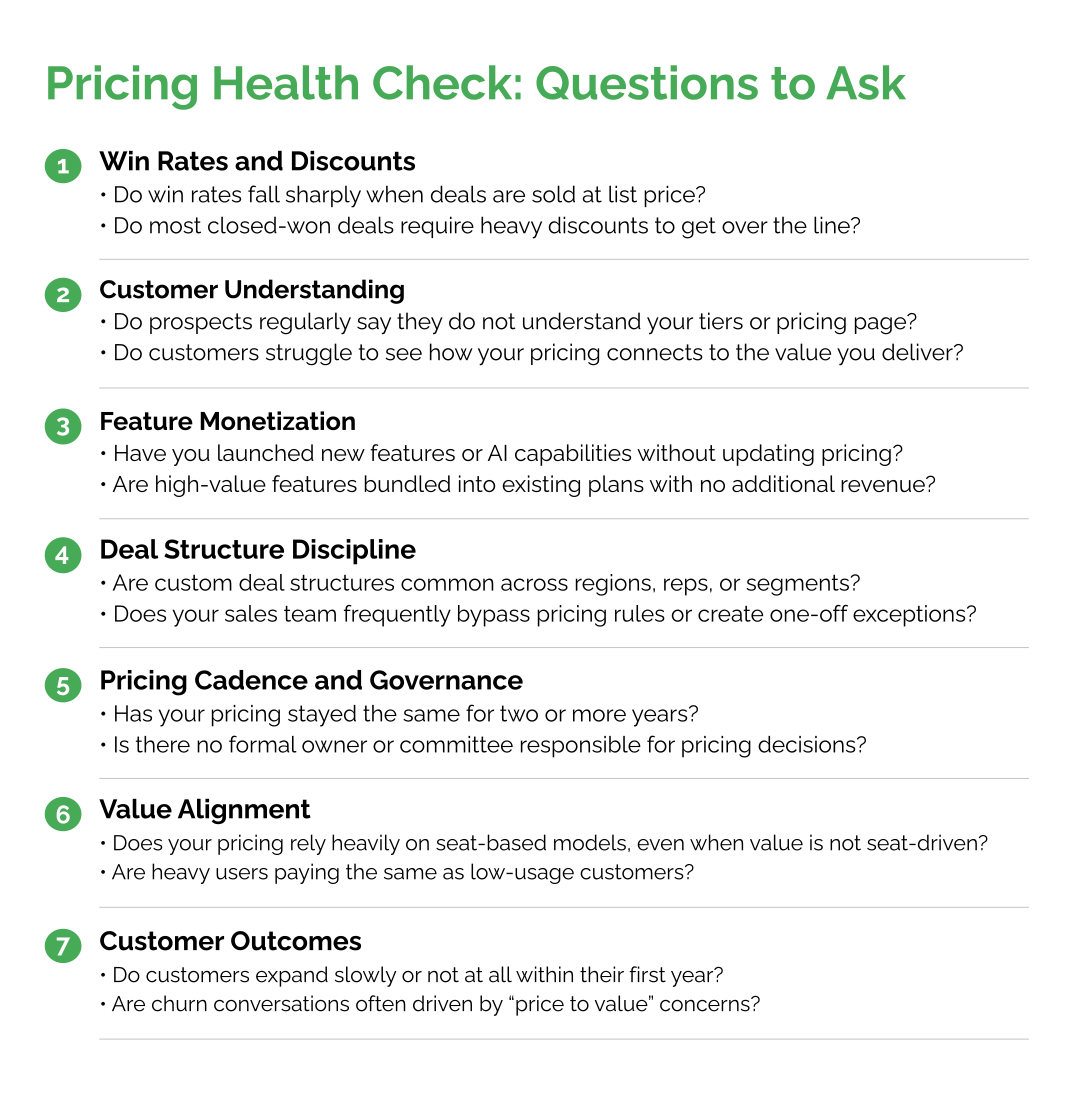
Leaders should watch for simple but telling signs that pricing is underperforming. If any of the following apply to your business, it is likely time to reevaluate your pricing strategy:
- Win rates look acceptable only when discounts are applied, but collapse when pricing is at target
- Prospective customers say that tiers or plans “do not make sense.”
- Significant features, especially major new ones such as AI or modules are included at no extra cost
- Custom or one-off deals are common
- Pricing has not changed meaningfully in two or more years despite product evolution or market shifts
- These indicators often signal that pricing is not treated as a strategic lever but rather as a checkbox exercise, locked in place by inertia or fear of friction
What Leading SaaS Firms Do Differently
A growing number of successful SaaS companies are treating pricing as a core business capability, not a one-time decision. Their improved results are not coincidental but intentional. Their approach typically includes three key practices:
- Align pricing to value rather than to seats
Usage-based or value-linked pricing models allow fees to scale with the actual value the customer receives. This approach is more equitable for customers and more profitable for vendors, especially when usage or feature consumption varies widely across accounts. Recent data confirms that usage-based pricing (UBP) is no longer experimental but mainstream: in a 2025 survey of SaaS firms , 33 percent reported that they have adopted UBP versus user-based at 32%.
- Modernize packaging and tiering
Instead of generic tiers, leading firms offer clearly differentiated packages aligned to customer jobs-to-be-done or outcome segments. Add-ons, modular pricing, and usage tiers give customers transparency and allow vendors to capture incremental value as customers adopt more advanced or resource-intensive features.
- Enforce pricing discipline through operational governance.
Rather than offering ad-hoc discounts or custom deals, top-performing companies use formal pricing governance: deal desks, discount guardrails, repeatable rules, and periodic pricing reviews. According to 2025 research, pricing is now recognized as the fastest and most reliable lever for value creation, but only if it is executed with discipline and ownership.
When pricing becomes an operational capability rather than a static setting, companies unlock margin expansion, cleaner deals, and clearer value capture from innovation.
What Executives Should Do Next: A Simple 3-Step Action Plan
For leaders who acknowledge the risk of pricing inertia but are unsure where to begin, the following playbook can deliver tangible results within months.
- Audit current pricing health:Review your discounting history, deal data, feature-by-feature revenue capture, and customer feedback on pricing.Identify where value is being given away or where usage patterns are misaligned with price plans.
- Select one or two high-potential adjustments for quick wins:Examples might include pricing major new features at a premium, revising tier logic, or introducingusage-based pricing for a resource-intensive module. These changes send a signal internally and externally that pricing is now a strategic lever.
- Establisha recurring pricing review rhythm: Move away from multi-year pricing freezes. Leading companies now re-evaluate pricing every 180 days, allowing continuous adaptation as product, usage, or market conditions evolve.
This iterative model balances rigor and flexibility while ensuring pricing evolves in lock-step with product and value delivery.
Conclusion
In 2026, treating pricing as a static afterthought is no longer acceptable. For SaaS companies navigating uncertain markets, rising competition, and accelerating feature velocity, especially with AI-driven functionality, pricing represents the fastest and most reliable lever for improving profitability.
Companies that fail to act risk draining margin, undercharging customers, and failing to capture the full value of their innovations. Firms that treat pricing as a strategic capability, aligned to value, governed with discipline, and reviewed frequently, will emerge stronger and more profitable.
If you have not reviewed your pricing architecture in more than a year, now is the time.