Summary
In this episode of The Pricing Guys, Avy and Michael examine McDonald’s traffic decline, shifting customer trade-offs, and the risk of blaming weak results on the economy instead of looking closely at price perception and competitive alternatives.
Key takeaways
- Price increases can lift average ticket and margin while still weakening traffic.
- Customers are comparing McDonald’s with fast casual restaurants, grocery stores, and the option to do nothing.
- The middle of the market can become a difficult place to compete when value and premium alternatives feel more attractive.
- Price perception depends on the full customer experience, not just the menu price.
- Performance should be analyzed by region, customer group, and competitive set instead of relying on broad explanations.
- Sustainable growth requires a clear view of where price increases begin to damage demand.
When value starts to feel expensive
McDonald’s is supposed to be one of the easier choices in a difficult economy. When fast casual restaurants and full-service dining feel too expensive, customers have traditionally traded down to fast food.
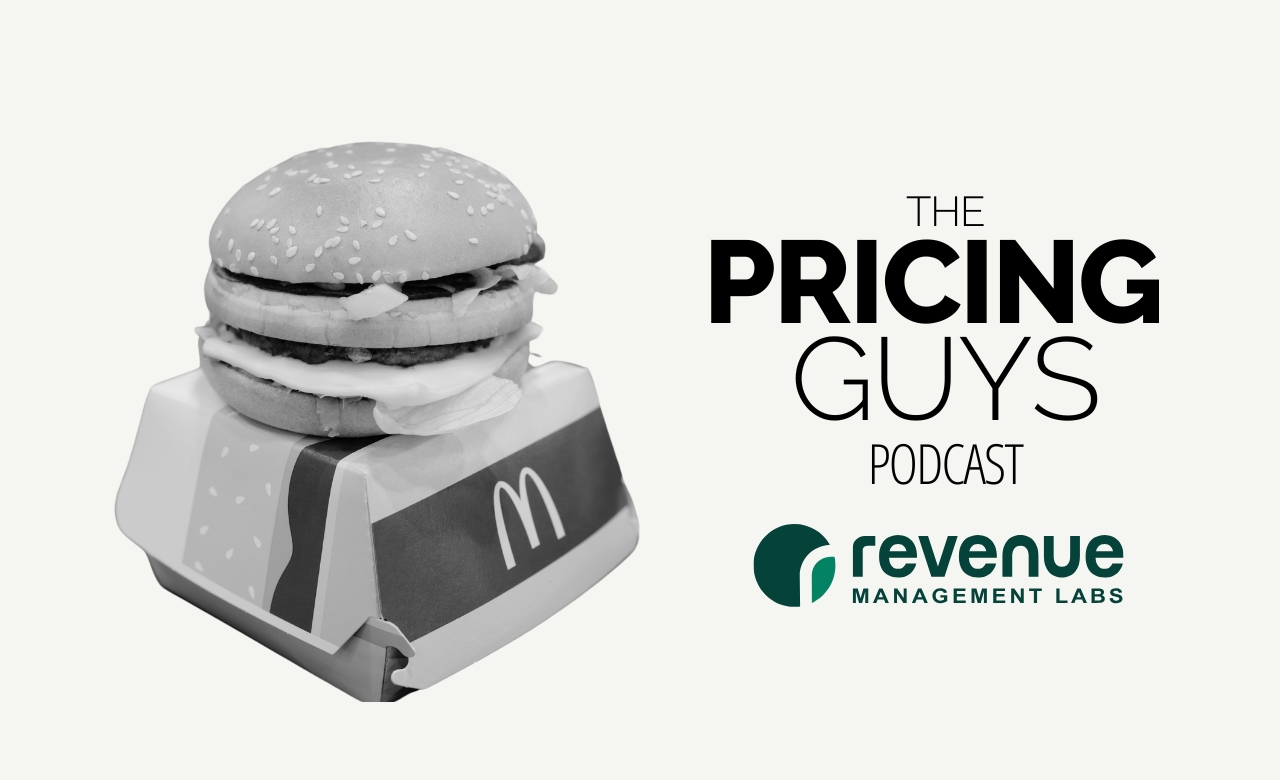
That logic is now under pressure. A Big Mac meal, drink, fries, and a promotional toy recently came to about $14.99. For a family ordering more than one meal, the total can quickly feel less like a small convenience purchase and more like a serious spending decision.
That creates what the hosts call “sticker shock.” Customers may not expect to feel surprised by a McDonald’s bill. Once they do, they naturally start asking what else they could get for the same money.
The issue is not simply whether the price is objectively high. It is whether the customer still believes the meal delivers enough value at that price.
Customers are comparing more widely
People do not always compare McDonald’s only with Burger King, Popeyes, or Taco Bell. They may compare it with completely different ways to solve the same need.
For example, someone who wants a steak could spend roughly $20 at a grocery store and cook it at home. Or they could spend around $32 at a fast casual steakhouse and receive a cooked meal, a side, and a more complete dining experience.
The fast casual option costs more, but the gap may feel small enough to justify the convenience and quality. At the same time, the grocery store may look more attractive to customers focused on saving money.
This leaves a traditional value restaurant in a difficult position. It may no longer be the cheapest option, but it may also not offer enough added experience to support a premium price.
The danger of the middle tier
The conversation compares this situation with an insight from the beer industry. Shoppers sometimes bought a small pack of premium beer for a special occasion and a full case of value beer for the rest of the event. They were not necessarily choosing the middle-priced product at all.
The same pattern can show up in foodservice. A customer may choose one of two extremes:
- Eat at home for the lowest possible cost.
- Spend more on a meal that feels meaningfully better.
The middle option can lose appeal if customers do not see a clear reason to choose it.
This is an important pricing lesson across industries. A company should not assume that customers move neatly from low to mid to high price points. People make trade-offs based on the occasion, budget, quality, convenience, and what they believe they are getting in return.
“It’s the economy” may not be enough
Economic pressure may be part of the story, but it is not a complete explanation. In some cases, economic uncertainty should increase demand for value-focused brands. At the same time, other restaurant businesses, including premium casual concepts, can continue to grow.
That contrast matters. If customers are still spending in some parts of the market, leaders need to understand where the money is going and why.
A broad explanation such as “consumers are worried about the economy” can become a convenient way to avoid harder questions:
- Has the price moved beyond the customer’s willingness to pay?
- Is the product still differentiated from cheaper alternatives?
- Has the customer experience improved along with the price?
- Which customer segments are leaving?
- Are customers shifting to another restaurant, cooking at home, or simply spending less?
Revenue Management Labs approaches these questions through customer, market, and performance data rather than generic assumptions. AI can help identify patterns quickly, but experienced pricing teams still need to interpret those patterns and connect them to practical decisions.
The “do nothing” competitor
The idea of a competitive alternative becomes even more important in business-to-business pricing. A customer may not choose another provider. They may delay the project, keep an existing process, or stop discretionary spending altogether.
That is the do-nothing option, and it is becoming more common when uncertainty is high. The same principle applies in consumer markets. A customer might skip the restaurant visit, use ingredients already at home, or wait for a promotion.
Winning against this alternative requires more than showing that a product is better than a competitor. The company must show why the purchase is worth making now.
Look for pockets of opportunity
A national pricing reset is rarely the best answer. Customer behavior can vary by region, income group, local competition, daypart, and restaurant format.
One market may have room for a price increase, while another may already be near its breaking point. A promotion that works in one customer segment may simply reduce margin in another.
A better process is to:
- Decompose traffic, average ticket, revenue, and margin results.
- Identify where customer loss is concentrated.
- Map the real alternatives in each market.
- Test price, package, and value changes against those alternatives.
- Track whether the changes improve both demand and profitability.
This is the practical “blocking and tackling” of pricing. It is not a blanket solution. It is a focused search for the areas where a business can get the strongest return.
Revenue growth needs more than a higher ticket
Price increases can make short-term results look healthier. Average ticket may rise, and margin dollars may improve, even as traffic begins to fall. The risk appears when declining visits eventually outweigh the benefit of higher prices.
Leaders should therefore monitor more than margin percentage. They also need to understand customer frequency, new customer acquisition, mix shifts, lost occasions, and the long-term effect of reduced traffic.
The key question is not simply, “Can we charge more?” It is: “How much demand can we afford to lose, and what happens if that loss continues for the next 24 months?”
That is where pricing strategy becomes a business strategy. The right answer will depend on the company’s data, market position, customer segments, and ability to execute. For McDonald’s and the broader fast food industry, the next challenge is proving that a higher price still represents a worthwhile choice.